Diffusion and osmosis worksheets frequently assess understanding of particle movement, concentration gradients, and membrane permeability, often presenting scenarios for identification.
These PDF resources, like those found on Studocu and Course Hero, help students define key terms and analyze how molecules behave in different solutions.
Worksheets from sources like Docsity provide practice questions and answers, reinforcing concepts related to membrane structure and function, and gradient dynamics.
What are Osmosis and Diffusion?
Diffusion, as explored in worksheet exercises, is the movement of particles from areas of high concentration to low concentration, aiming for equilibrium – a core concept tested in PDF resources.
Conversely, osmosis, frequently assessed on worksheets, specifically involves water movement across a semi-permeable membrane, driven by water potential differences, as seen in red blood cell examples.
Worksheets often require students to distinguish between these processes, identifying whether a scenario depicts simple particle movement (diffusion) or water transport (osmosis).
PDF answer keys, available on platforms like Course Hero and Studocu, provide clarity on correct identifications, reinforcing understanding of these fundamental biological processes and their applications.
Understanding these definitions is crucial for tackling more complex problems presented in osmosis and diffusion worksheets.
Importance of Understanding these Processes
Mastering diffusion and osmosis, often reinforced through worksheet practice, is vital for comprehending biological systems – a key focus of many PDF study guides.
These processes underpin crucial functions like gas exchange in lungs and nutrient absorption in the small intestine, scenarios frequently presented for analysis in educational materials.
Successfully answering worksheet questions, utilizing resources from platforms like Docsity, demonstrates an ability to apply these concepts to real-world examples.
Understanding how cells interact with their environment, as detailed in PDF answer keys on Studocu and Course Hero, is foundational for further study in biology and related fields.
Therefore, diligent completion of osmosis and diffusion worksheets builds a strong base for advanced scientific understanding.
Diffusion in Detail
Diffusion worksheets, often in PDF format, emphasize particle movement from high to low concentration, aiming to equalize distribution throughout a medium.
Definition of Diffusion
Diffusion, as explored in numerous osmosis and diffusion worksheet answers PDFs available online, is fundamentally the net movement of anything – atoms, ions, molecules – from a region of higher concentration to one of lower concentration.
These worksheets consistently highlight that this movement occurs down a concentration gradient, requiring no external energy input; it’s a passive process. Students are often tasked with identifying diffusion in scenarios, distinguishing it from other transport mechanisms.
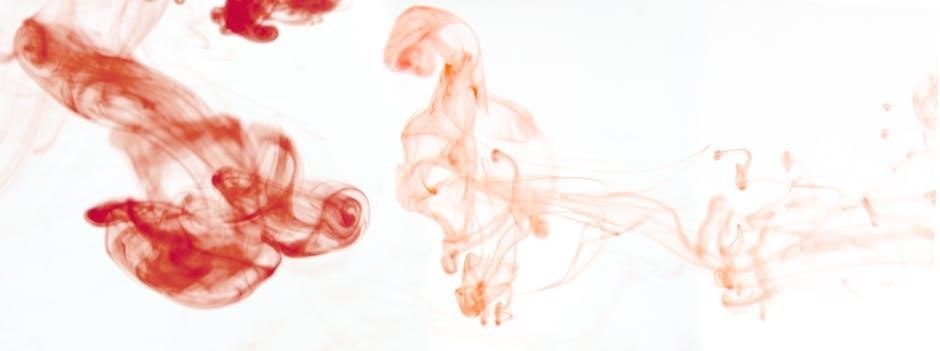
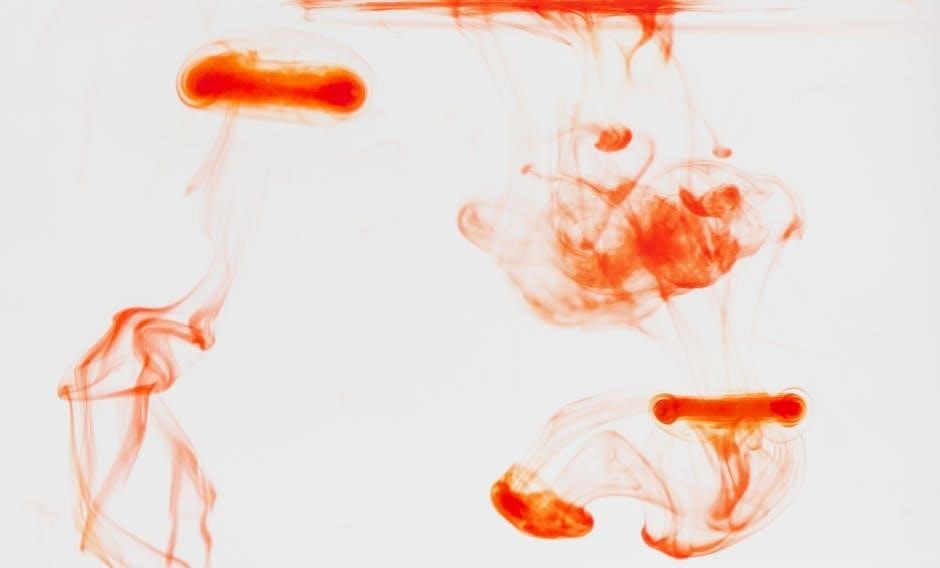
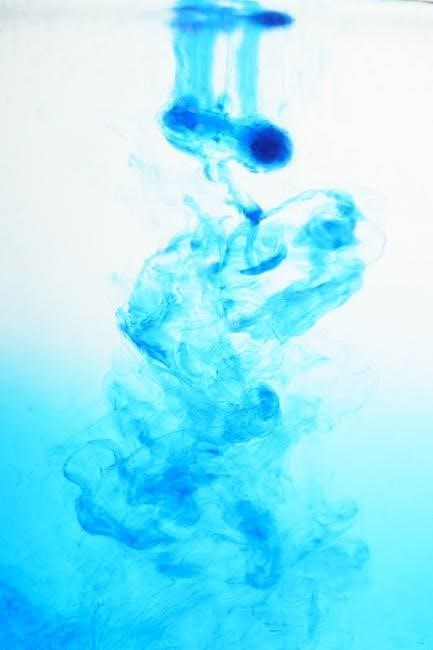
Worksheets from platforms like Course Hero and Studocu frequently present examples, such as the spreading of a dye in water, to illustrate this core principle. Understanding this definition is crucial for correctly answering questions on these assessments.
Concentration Gradient and its Role
Osmosis and diffusion worksheet answers PDFs consistently emphasize the concentration gradient as the driving force behind diffusion. This gradient represents the difference in solute concentration between two areas.
Worksheets often present scenarios where students must determine the direction of diffusion based on the gradient. A steeper gradient leads to faster diffusion rates, a concept frequently tested in practice questions.
Resources like those found on Docsity and Course Hero illustrate how particles naturally move to equalize concentration, effectively diminishing the gradient over time. Understanding this relationship is key to solving problems involving particle movement and equilibrium, as highlighted in these educational materials.
Factors Affecting the Rate of Diffusion
Osmosis and diffusion worksheet answers PDFs routinely explore factors influencing diffusion speed. Temperature is a key element; higher temperatures increase kinetic energy, accelerating particle movement and thus, diffusion rates – a common question topic.
Molecular weight also plays a role, with smaller molecules diffusing faster than larger ones. Worksheets often present comparative scenarios to assess this understanding.
Furthermore, surface area is critical; a larger surface area allows for more efficient diffusion. Resources on platforms like Studocu and Course Hero demonstrate these principles through practice problems and explanations, reinforcing the connection between these factors and diffusion efficiency.
Temperature
Osmosis and diffusion worksheet answers PDFs consistently highlight temperature as a crucial factor impacting diffusion rates. These resources demonstrate that increased temperature directly correlates with faster diffusion, due to heightened kinetic energy of molecules.
Worksheets often pose questions requiring students to predict diffusion outcomes at varying temperatures, testing their grasp of this principle. Explanations within these PDFs emphasize that warmer conditions lead to more frequent and forceful molecular collisions.
Consequently, particles traverse a given distance more quickly. Platforms like Course Hero and Docsity provide examples illustrating this relationship, solidifying understanding through practical application and problem-solving scenarios.
Molecular Weight

Osmosis and diffusion worksheet answers PDFs invariably address molecular weight as a significant determinant of diffusion speed. These materials illustrate that smaller molecules diffuse more rapidly than larger ones, a principle frequently assessed through worksheet questions.
Resources on platforms like Studocu and Course Hero often present scenarios comparing the diffusion rates of different-sized particles, requiring students to apply this concept. The PDFs explain that lighter molecules possess greater velocity at a given temperature.
This increased speed facilitates quicker movement across a concentration gradient. Worksheets emphasize understanding how molecular weight influences the efficiency of substance transport, crucial for biological processes.
Surface Area
Osmosis and diffusion worksheet answers PDFs consistently highlight surface area as a critical factor influencing diffusion rates. These resources demonstrate that a larger surface area facilitates faster diffusion, a concept frequently tested through practical examples.
Worksheets available on platforms like Course Hero and Docsity often present scenarios comparing diffusion across membranes with varying surface areas, requiring students to analyze the impact. PDF materials explain that increased surface area provides more space for molecules to cross.
This directly correlates to a higher rate of substance transport. Understanding this principle is vital for comprehending biological systems, like nutrient absorption, as emphasized in these educational materials.

Osmosis in Detail
Osmosis worksheet answers in PDF format emphasize water movement across semi-permeable membranes, driven by water potential differences, a key biological process.
Definition of Osmosis
Osmosis, as clarified in numerous osmosis and diffusion worksheet answers available in PDF format, is specifically the movement of water molecules.
This movement occurs across a semi-permeable membrane, from a region of high water potential – essentially, where water is more concentrated – to an area of lower water potential.
Worksheets consistently highlight that osmosis isn’t simply water moving to equalize concentration, but rather responding to differences in water potential.
Resources like those on Course Hero and Studocu demonstrate this through examples, such as red blood cells swelling in hypotonic solutions.
Understanding this precise definition is crucial for correctly answering worksheet questions and differentiating osmosis from diffusion.
Semi-Permeable Membranes
Osmosis and diffusion worksheet answers, frequently found as PDF documents, emphasize the critical role of semi-permeable membranes in osmosis.
These membranes allow the passage of water molecules but restrict the movement of solute particles, creating a selective barrier.
Worksheets often present scenarios testing understanding of how this selectivity impacts water movement and concentration gradients.
Resources from platforms like Docsity and Course Hero illustrate that the membrane’s permeability dictates the rate and direction of osmotic flow.
Correctly identifying whether a membrane is present and its permeability is key to accurately answering questions on these worksheets, distinguishing osmosis from free diffusion.
Water Potential and its Significance
Osmosis and diffusion worksheet answers, often available as PDF files, frequently require students to apply the concept of water potential.
These worksheets assess understanding of how solute concentration affects free energy of water, driving its movement across membranes.
Resources like those on Studocu and Course Hero demonstrate that water moves from areas of high water potential to low water potential.
Calculating water potential and predicting the direction of water flow are common tasks, often involving scenarios with differing solute concentrations.
Mastering this concept, as reinforced by practice questions, is crucial for understanding osmotic processes in biological systems, as highlighted in worksheet examples.
Comparing and Contrasting Diffusion and Osmosis
Worksheet answers reveal both processes involve movement down concentration gradients, but diffusion handles all particles, while osmosis focuses on water.
Similarities Between Diffusion and Osmosis
Osmosis and diffusion worksheet answers consistently demonstrate that both are passive transport mechanisms, meaning they require no external energy input to occur.
Both processes are driven by the fundamental principle of increasing entropy – systems naturally move towards a state of greater disorder or equilibrium.
Crucially, both diffusion and osmosis involve the movement of substances down their concentration gradients, from areas of high concentration to areas of low concentration.
Worksheets highlight that both processes aim to achieve equilibrium, where the concentration of a substance is uniform throughout a given space or across a membrane.
Finally, both are vital for maintaining homeostasis in living organisms, facilitating the transport of essential molecules and regulating cellular environments.
Key Differences Between Diffusion and Osmosis
Osmosis and diffusion worksheet answers clearly illustrate that diffusion involves the movement of any molecule, while osmosis specifically concerns the movement of water molecules.
Diffusion can occur across a membrane or not, but osmosis requires a semi-permeable membrane to separate solutions with differing water potentials.
Worksheets emphasize that diffusion aims to equalize the concentration of all solutes, whereas osmosis focuses on equalizing water potential across the membrane.
While both follow concentration gradients, osmosis is directly influenced by solute concentration, impacting water movement, a concept frequently tested on worksheets.
Ultimately, diffusion is a broader process, and osmosis is a specific type of diffusion relating to water and membrane permeability.
Real-World Examples of Diffusion
Worksheet answers often cite gas exchange in lungs and nutrient absorption as diffusion examples, showcasing molecule movement down concentration gradients.
Gas Exchange in Lungs
Diffusion is central to gas exchange within the lungs, a concept frequently addressed in osmosis and diffusion worksheet answers. Oxygen, at a higher concentration in inhaled air, moves across the alveolar membrane into the bloodstream.
Conversely, carbon dioxide, more concentrated in the blood, diffuses into the alveoli to be exhaled. These worksheets often present scenarios requiring students to identify this process.
Understanding this relies on grasping concentration gradients – the driving force behind diffusion. PDF resources from platforms like Course Hero and Studocu illustrate this with diagrams and questions.
Worksheet problems may ask students to predict how changes in concentration affect the rate of oxygen or carbon dioxide transfer, reinforcing the link between theory and real-world physiology.
Nutrient Absorption in the Small Intestine
Diffusion plays a crucial role in nutrient absorption within the small intestine, a topic commonly assessed in osmosis and diffusion worksheet answers. Digested nutrients, like glucose and amino acids, move from the intestinal lumen into the bloodstream.
This movement occurs down a concentration gradient, facilitated by the intestinal villi’s large surface area. Worksheets often present scenarios requiring students to explain this process.
PDF resources, available on platforms like Docsity and Course Hero, frequently include diagrams illustrating nutrient transport across the intestinal lining.
Worksheet questions may focus on how factors like surface area and concentration gradients impact absorption efficiency, solidifying understanding of these biological principles.
Real-World Examples of Osmosis
Osmosis examples, often featured in worksheet answers PDF formats, include red blood cell swelling in freshwater and plant root water uptake.
Red Blood Cell Behavior in Different Solutions
Osmosis worksheet answers frequently explore red blood cell responses to varying solution types – hypotonic, hypertonic, and isotonic – demonstrating osmotic principles.
In a hypotonic solution (lower solute concentration), water rushes into the cells, causing them to swell and potentially burst, a phenomenon often illustrated in PDF worksheets.
Conversely, a hypertonic solution (higher solute concentration) draws water out of the cells, leading to crenation, or shriveling, a key concept tested on diffusion and osmosis worksheets.
An isotonic solution maintains equilibrium, with no net water movement, representing the ideal environment for red blood cells, as explained in many answer keys.
Understanding these scenarios, often presented with diagrams, is crucial for mastering osmosis, as evidenced by common questions on osmosis worksheet answers.
Plant Water Uptake by Roots
Osmosis worksheet answers consistently feature plant root water absorption as a prime example of osmosis in action, often detailed in accompanying PDF documents.
Root hair cells create a water potential gradient; the soil solution typically has a higher water potential than the cells, driving water into the roots via osmosis.
These worksheets often ask students to explain how mineral ion concentration within root cells influences this process, impacting the overall osmotic gradient.
Understanding the role of the cell wall in preventing bursting, despite water influx, is a common element in diffusion and osmosis worksheet answers.
Analyzing diagrams illustrating water movement through root tissues is frequently assessed, reinforcing the concept of osmosis in a biological context, as seen in answer keys.
Osmosis and Diffusion Worksheet Analysis
PDF worksheet answers reveal common questions focus on defining terms, identifying processes, and predicting concentration changes in various scenarios, aiding comprehension.
Common Question Types on Worksheets
Osmosis and diffusion worksheets, often available as PDF documents, commonly present questions requiring students to define diffusion and osmosis, explaining the concept of a concentration gradient. A frequent task involves identifying whether a given scenario represents diffusion or osmosis, demanding a clear understanding of each process.
Many worksheets feature diagrams illustrating particle movement across membranes, asking students to label the direction of water or solute flow. Problems also frequently assess the ability to predict how cells will behave – swelling, shrinking, or remaining stable – when placed in hypotonic, hypertonic, or isotonic solutions.
Furthermore, students are often asked to explain real-world examples, like red blood cell behavior or plant water uptake, demonstrating the practical application of these biological principles. Analyzing answer keys from resources like Studocu and Course Hero reveals these consistent question formats.
Identifying Diffusion vs. Osmosis Scenarios
Osmosis and diffusion worksheet answers, frequently found in PDF format on platforms like Course Hero and Studocu, heavily emphasize scenario-based questions. Students must discern whether a situation depicts diffusion – the movement of solutes – or osmosis – the movement of water across a semi-permeable membrane.
A key distinction lies in what is moving. If the question describes the spread of a substance like dye in water, it’s diffusion. If it involves water moving to balance concentration differences, it’s osmosis. Worksheets often present examples like red blood cells in varying solutions, testing this understanding.
Successfully identifying these scenarios requires recognizing the role of concentration gradients and membrane permeability, skills reinforced by analyzing provided answer keys and practice problems.
Understanding Concentration Changes in Problems
Osmosis and diffusion worksheet answers, often available as PDF downloads from sites like Docsity and Course Hero, frequently present problems requiring students to predict concentration changes. These questions assess comprehension of how particles redistribute to achieve equilibrium.
Students must analyze initial concentration gradients and determine the direction of movement – from high to low concentration for diffusion, and across a membrane for osmosis. Worksheets often involve calculating concentration differences or predicting final concentrations after a period of time.
Correctly answering these problems necessitates understanding that diffusion and osmosis continue until dynamic equilibrium is reached, where concentrations are equalized, though particles still move.